Rosacea Is an Inflammatory Disease, So Why Is Heat the Default?
A patient with rosacea sits in the treatment chair, cheeks already warm and flushed. For decades, the aesthetic toolkit has leaned heavily on energy devices that generate thermal injury, most commonly intense pulsed light (IPL) or vascular lasers. The logic is straightforward: targeting vasculature should improve visible redness.
However, this approach raises a clinical question: what if targeting vessels addresses the symptom while leaving the underlying inflammatory process untouched? Rosacea is a chronic inflammatory condition, and patients frequently report flares triggered by the thermal stress these devices create. This tension has led clinicians to explore a different logic: inflammatory modulation through precision cooling.
Cryomodulation represents a fundamentally different mechanism from heat-based devices.
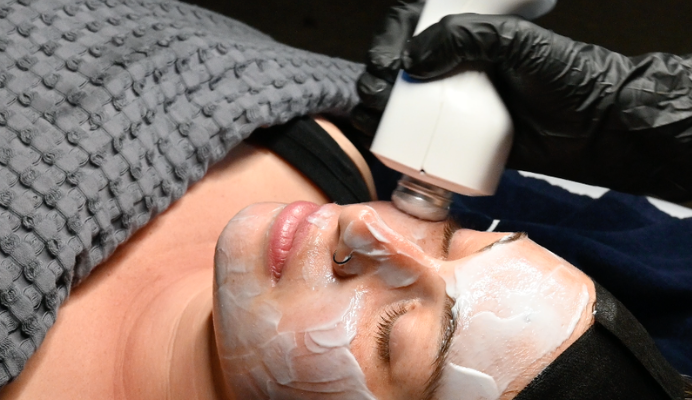
Instead of using wavelength-based targeting of chromophores, Glacial® Skin relies on precision cooling applied to the skin.
Precision cooling can produce several physiological effects:
- Vasoconstriction: Reducing visible redness.
- Slowed nerve conduction: Managing sensitivity and discomfort.
- Inhibition of pro-inflammatory cytokines: Directly addressing the inflammatory driver.
- High Success Rate: Over 90% of patients saw a reduction in rosacea severity at one and two months post-treatment.
- Durable Improvement: 85% of patients maintained a reduction in rosacea severity three months after their final treatment.
- Patient Satisfaction: 100% of patients rated the procedure as comfortable and would recommend it to others.
- Symptom Relief: Patients reported reduced redness, fewer papules and pustules, and less frequent blushing.
- Safety Profile: There were no treatment side effects or device-related adverse events reported.
The Glacial Skin system applies sustained, feedback-controlled cooling across the skin surface. Unlike traditional cryosurgery, which uses temperatures as low as −196°C to destroy tissue, Operating within precise temperature ranges designed to modulate skin physiology without tissue injury.
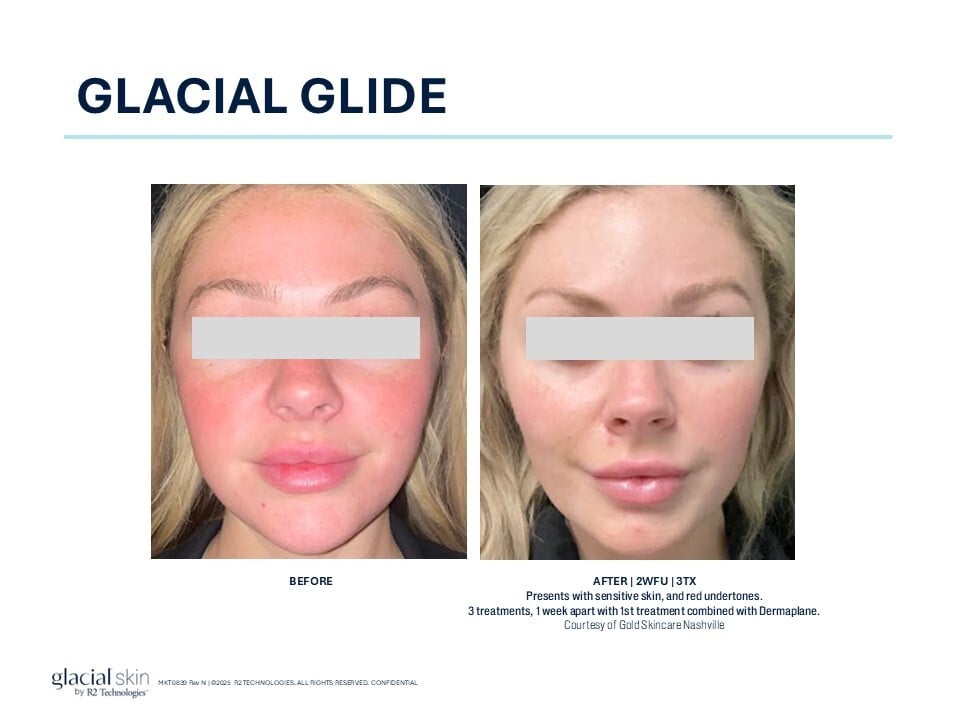
Proven Clinical Results A prospective, multi-center clinical study evaluating the Glacial® Rx System in 20 subjects with rosacea* further validates this approach. After a series of five Glacial® Glide Rx treatments, results included:
-
Plastic surgeon Dr. Isidoros Moraitis observed a gradual shift in rosacea management after using the technology.
-
While he utilizes IPL, he noted favorable responses with Glacial Skin for patients with diffuse erythema and persistent redness that reflects underlying inflammation rather than isolated vessels.
-
These patients often struggle with heat-based devices, reacting unpredictably or flaring after thermal treatments. Instead of provoking the skin, Glacial Skin actively cools it. Patients often describe the experience as a comfortable, spa-like treatment delivered within a medical procedure.
-
-
Clinical observations show durable redness reduction after cryomodulation treatments. Dr. Moraitis discussed a patient whose baseline redness remained reduced four months after treatment. Observing improvement months later suggests the therapy may influence underlying inflammatory signaling rather than simply masking vessels.
-
A pilot clinical evaluation by Dr. Neal Bhatia and Dr. Bruce Katz further provided early evidence that precision cooling may help reduce inflammation in patients with rosacea. This represents a shift in framework: treat the inflammatory driver rather than only the vascular outcome.
-
-
When Heat-Based Treatments Aren't the Right Fit, many patients become reluctant to repeat procedures that rely on heat energy due to discomfort or recovery flares.
Glacial Skin offers a different conversation. Rather than explaining how thermal energy targets vessels, clinicians can explain that the treatment is designed to cool the skin and calm redness.
This distinction, modulation versus destruction, is critical. For patients with highly reactive skin, a cooling-first strategy introduces a fundamentally different therapeutic pathway. If the condition is driven by inflammation, the most logical approach is to effectively calm the inflammatory cycle.